
Profitability is essential, but it does not guarantee an establishment's financial solidity. In hospitality, well-controlled cash flow makes it possible to face seasonal variations, invest calmly, and maintain a constant quality of service.
Why is cash flow a major issue?
Hotels and riads face several challenges:
- An activity that is often seasonal.
- Significant fixed costs (salaries, energy, maintenance, insurance).
- Payment terms that are sometimes long with certain corporate clients or agencies.
- Regular investment needed to preserve the establishment's quality level.
Poor anticipation can quickly lead to cash-flow strain, even when revenue is satisfactory.
Best practices
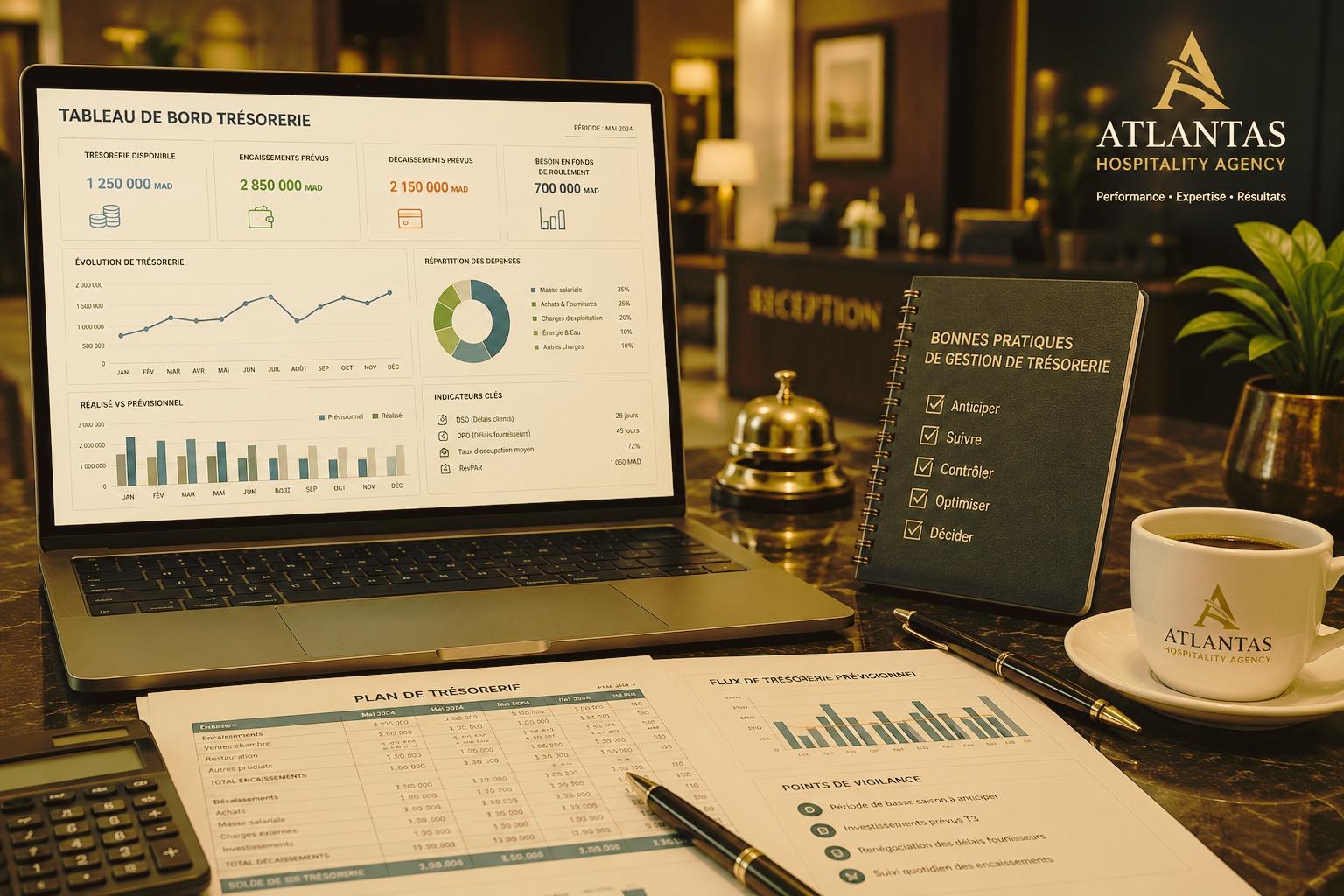
- Build a cash-flow forecast. A 12-month cash table lets you anticipate periods of strain and plan financing needs.
- Track collections daily. Controlling payments from booking platforms, travel agencies, corporate clients, and direct reservations is indispensable.
- Manage supplier payment terms. Negotiating suitable conditions preserves liquidity without weakening relationships with partners.
- Optimize inventory. Excessive stock needlessly ties up cash; rigorous management of food, beverage, linen, and consumables purchases improves working capital.
- Control operational costs. Tracking energy spending, payroll, catering costs, and maintenance contracts contributes directly to preserving cash.
- Put monthly reporting in place. A few simple indicators — available cash, expected collections, expected disbursements, working-capital requirement, and the gap between forecast and actuals — let you steer the financial situation effectively.
Cash flow is a strategic tool
Good cash management is not only about avoiding payment difficulties. It also allows you to seize opportunities: renovating rooms, investing in digital, improving the guest experience, or developing the business. At Atlantas Hospitality Agency, we support hotels, riads, and guesthouses in improving their financial performance through operational audits, management dashboards, and decision-support tools adapted to their activity.